
Pakistan’s energy sector is facing challenges such as persistent power shortages, rising circular debt, and a heavy reliance on imported fuels. The need for affordable, domestically sourced energy has become more urgent than ever. Wind energy emerges as a promising, underexplored option, especially along Pakistan’s coastal wind corridors, which could deliver over 50,000 MW. Only a small part of this vast capacity has been harnessed so far, leaving the country overly dependent on fossil fuels that threaten both our economy and environment. This insight argues that wind energy can be a strategic alternative to expensive imported energy, boost energy balance and security, and support climate resilience.
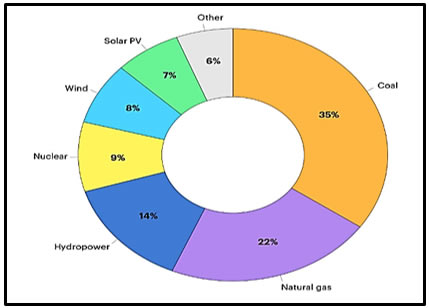
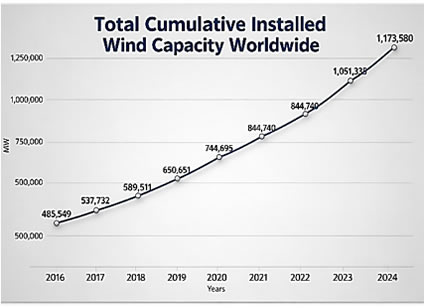
Globally, there has been a surge in Wind Energy production. Wind contributed only 0.2% of global energy production in 2000. Currently, Wind energy accounts for around 8% of the world’s electricity production. Figure 1 shows the share of wind energy along with the rest of the sources in global electricity production. Wind now meets 20% of Europe’s electricity demand on average, and the European Commission sees wind providing 50% of Europe’s electricity by 2050. As of 2024, globally, wind energy produced 1.17 terawatts of electricity. Figure 2 shows the gradual increase in total installed wind capacity worldwide, demonstrating the world's rapid pursuit and confidence in Wind Energy and highlighting its importance.
Figure 1: Global Electricity Production by Source 2024
Source: International Energy Agency
Figure 2: Total Cumulative Installed Wind Capacity Worldwide
Source: World Wind Energy Association, Global Statistics
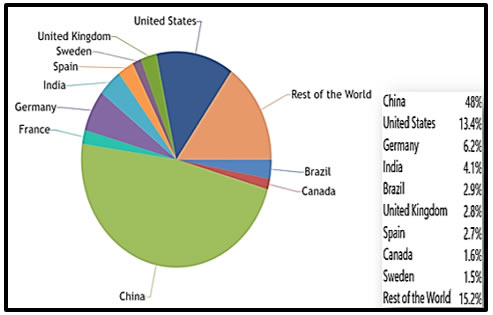
China leads the global wind energy market with a 48% share, thanks to its domestic manufacturing capabilities. The US is second with 13.4%, generating about 10-12% of its energy from wind.
India surpasses 50 GW, ranking fourth, with wind capacity exceeding Pakistan's total energy. Denmark, with around 54% of electricity generated by wind, exemplifies success through planning and an offshore focus. Brazil has grown rapidly and is now ranked fifth, accounting for 2.9% of global wind energy. Figure 3 shows the top 10 countries and their shares.
Figure 3: Wind Power Capacity by Country (Top 10 & Percentage)
Source: Illustrated by the Author
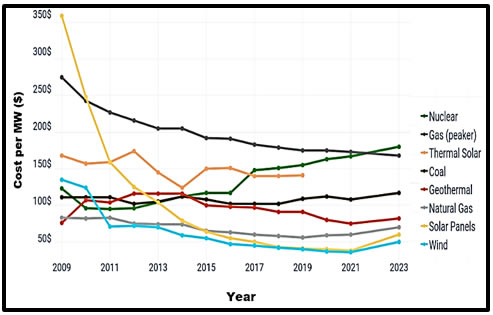
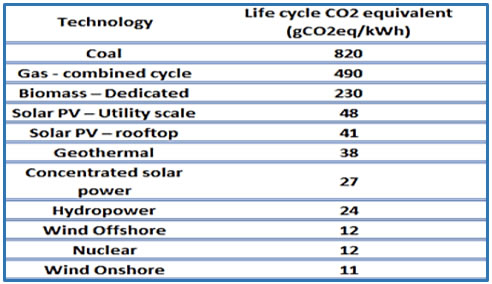
Figure 4 shows the levelized cost of energy (the average cost of electricity generation over the lifetime of an energy asset) as of 2025, with wind energy costing $37—the lowest among all sources—making it the cheapest. Wind also has the second-lowest capital cost. Figure 5 shows wind's greenhouse gas emissions at just 11 grams of CO2 per kWh, the lowest among all sources, making it the cleanest source. The sector also offers significant potential for industrial and job growth through local manufacturing, logistics, and maintenance.
Figure 4: Levelized Cost of Electricity by Source per MW (2009-2023)
Source: Illustrated by the Author
Figure 5: Greenhouse Gas Emissions of Energy Sources
Source: Greenhouse gas emissions of energy sources
Pakistan’s energy sector faces challenges due to reliance on imports and declining domestic capacity. About 60% of energy comes from thermal sources like LNG, coal, and oil.
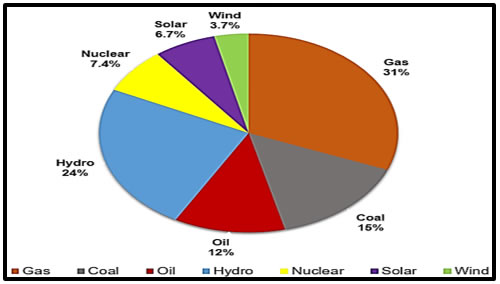
Natural gas reserves are depleting at nearly 10% annually, increasing dependence on imported LNG and oil. This strains the economy, with circular debt over PKR 2.6 trillion, reduced foreign reserves, and high emissions. Citizens feel the impact of higher tariffs, inflation, and outages. Expanding renewables, especially wind (3.7%, 1845 MW), is urgent. The total installed capacity of Pakistan is 49270 MW, as shown in Figure 6.
Figure 6: Pakistan Energy Mix 2024
Source: Illustrated by the Author
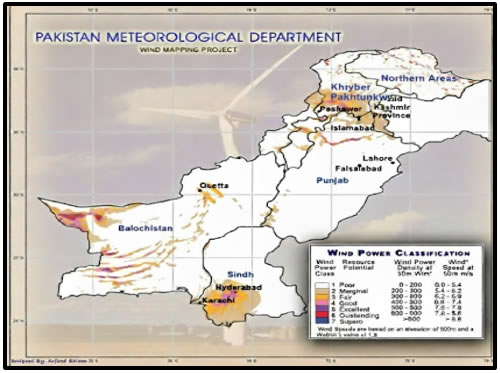
Feasibility studies in Pakistan indicate that about 3.5% of the land is suitable for wind energy, with a potential of over 132,990 MW for cost-effective utility-scale power. Surveys by Pakistan Meteorological Department (PMD) and Ministry of Science & Technology (MoST) estimate that the coastal regions, especially Sindh, have about 50,000 MW potential. Parts of Balochistan’s coast, including Pasni and Gwadar, have offshore wind potential. At the same time, highland areas in KP and GB offer pockets of high wind for hybrid solar-wind systems to power remote communities. Figure 7 displays Pakistan’s Wind Mapping.
Figure 7: Wind Mapping Project (PMD)
Source: Pakistan Meteorological Department
The Gharo-Jhimpir wind corridor in Sindh covers 9,700 km² in Thatta district, with strong wind speeds of 7-8 m/sec and an exploitable potential of 11,000 MW, making it Pakistan's most lucrative wind corridor and the best in South Asia. By 2025, Pakistan will generate 1,845 MW of wind power (3.7% of its energy) from 36 projects in this corridor. Despite high capacity factors of 32–35%, Pakistan underutilises this potential.
Global experience shows that policy consistency, thoughtful planning, and local integration are key to the success of wind energy. Pakistan should combine India’s competitive auctions, China’s grid and industry integration, and Denmark’s policy continuity to turn vast coastal wind potential into affordable, secure, and sustainable energy.
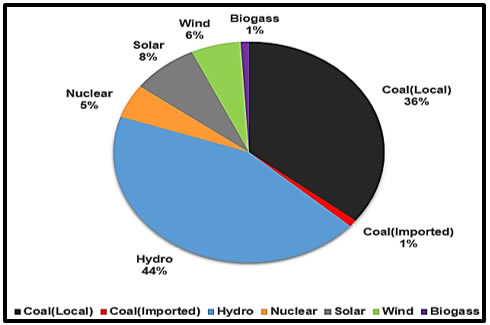
The National Electric Power Regulatory Authority (NEPRA) gave the Indicative Generation Capacity Expansion Plan 2047 (IGCEP 2047), prepared by the National Transmission and Dispatch Company (NTDC) in 2019. IGCEP projects Pakistan’s installed energy capacity of 168,246 MW by 2047, with wind energy share up to 10,000 MW (6% of the energy mix). Figure 8 illustrates Pakistan’s energy mix in 2047.
Figure 8: Pakistan Energy Mix 2047
Source: Illustrated by the Author
Pakistan's potential with the Gharo-Jhimpir wind corridor suggests IGCEP's 10,000 MW wind target for 2047 is low. It should be increased to harness the massive potential and reduce reliance on coal; the conservative projection results from limiting assumptions, not resource limits. Updating grid plans and costs could enable much more wind capacity.
The main challenge isn't resource potential but transmission congestion. Jhimpir–Gharo has limited capacity, causing NTDC to curb wind output because the grid can't handle all the generation due to capacity limits and planning delays. Wind remains the cheapest long-term energy source, but it requires high upfront costs and careful management.
Wind energy is essential for reducing dependence on imports, stabilising the grid, and accelerating decarbonization. Delaying it costs jobs and investment and worsens reliance on volatile fuel imports. With reforms, transmission planning, bankable procurement, hybridisation, and industrial policies, wind can transform Pakistan’s energy sector, making it self-reliant, stable, and sustainable.