
Shipbreaking, also referred to as ship recycling or ship dismantling, is a method for recovering recyclable materials from outdated vessels, including steel scrap, electronic components, and furniture, for industrial use. Pakistan’s shipbreaking yard is situated about 60 km southwest of Karachi, along a 10 km stretch of coast in Gadani, which has historically played a vital role in the country’s economy.
Gadani was the world’s largest shipbreaking setup in South Asia in the 1980s and currently ranked the world's third-largest shipbreaking yard by volume, after Alang (India) and Chattogram (Bangladesh). However, competition from neighbouring yards and relatively high import duties on decommissioned vessels have led to a significant drop in Gadani's output.
This insight argues that Pakistan can transform its shipbreaking industry from a scrap-driven sector into a source of industrial strength by aligning it with international conventions, making it globally compliant, environmentally safe, and a competitive recycling hub.
Although recycling facilities exist in Europe, North America, and the Caribbean, they are primarily located in South Asia, particularly in Pakistan (Gadani), Bangladesh (Chattogram), and India (Alang). Around 1,000 ships are scrapped worldwide each year; of these, 65-75% of them are sent to one of these three breaking yards.
Recognising the prospects of the ship-breaking industry for the country’s economy, the Government of Balochistan, under the Balochistan Development Authority (BDA) Act 1974, formulated the “Balochistan Shipbreaking Industry Rules-1979” to regularise the sector as an industry.
This includes Gadani’s designation as a port, a reduction in import duties on ships designated for dismantling, and a government task force to address infrastructure and logistics issues. Following the sector's regularisation under the BDA Act 1974, subsequent efforts toward structured development and regulation were enabled.
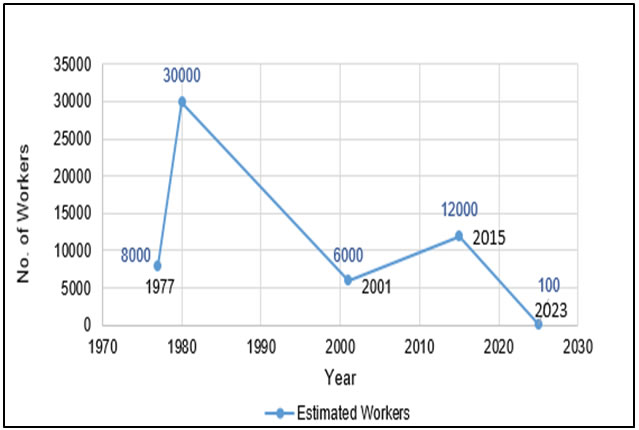
Figure 1: Gadani’s Workforce Data Trend from 1977-2023
Source: Self-compiled from various sources
Figure 1 shows that Gadani employed 8,000 workers in 1977; however, after the introduction of formal rules in 1979, the industry experienced increased economic activity, and the number of workers peaked at over 30,000 in the 1980s, reflecting the labour-intensive nature of steel recovery and the provision of additional services. By 2001, intensified competition from Alang and Chattogram, coupled with high import duties and a decline in ship arrivals, had reduced direct employment to around 6,000 workers.
In 2001, despite government incentives, such as lowering shipbreaking taxes from 15% to 10% to revive the industry, the sector accounted for less than 160,000 tonnes of scrap, compared with an average of 1,000,000 tonnes in the 1980s. In 2012, Gadani experienced a new expansion, with more ships entering the yard for recycling, and by 2015, an average of 12,000 workers were directly employed.
However, on November 1, 2016, the Gadani yard drew significant attention after a disastrous explosion ignited a massive fire on a ship being dismantled, marking the worst incident in the shipbreaking history of Pakistan. This exposed the persistent safety challenges that had disrupted operations.
In 2019, high taxation comprised a fixed sales tax of PKR 9,500 per ton, a 3% customs duty, a 2% additional customs duty, and a 4.5% import-stage income tax, which made operations much more expensive for local breakers, significantly reducing their competitiveness and revenue. In subsequent years, ship dismantling at Gadani continued to decline, employing up to 100 direct workers in 2023.
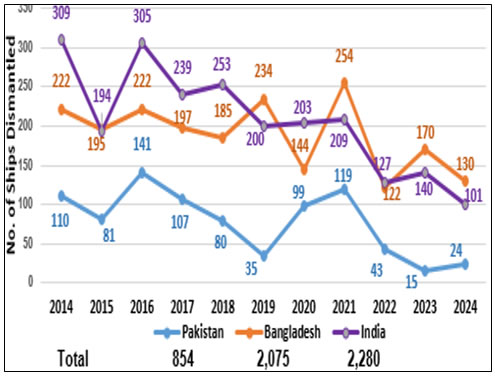
Figure 2: Year-Wise Ship Dismantling in South Asian Countries (2014-2024)
Source: NIMA & NGO Shipbreaking Platform
In 1982–83, 156 vessels totalling 964,758 tons were brought to Gadani for dismantling, marking its golden era and establishing it as one of the world’s busiest ship-recycling hubs. However, data from 2014-2024 (Figure 2) indicate trends among major South Asian shipbreaking destinations, with 62.5% of all end-of-life ships worldwide being broken in 2014. India dismantled 30% of vessels, Bangladesh 22%, and Pakistan 10.5%. Based on these figures, India saw 67% reduction in shipbreaking, Bangladesh 41%, and Pakistan 78% over the decade.
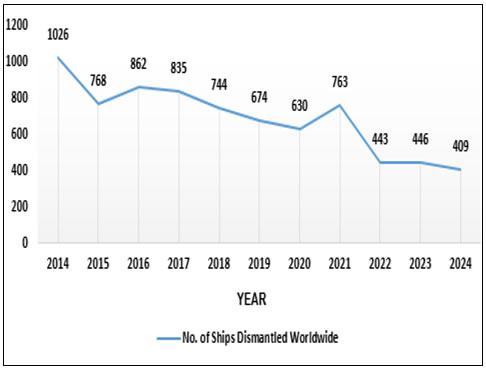
Figure 3: Worldwide Dismantled Ships 2014-2024
Source: Compiled by the author from various sources
Figure 3 shows an overall decline in ship demolition, not unique to Pakistan, but reflects broader global trends driven by multiple interconnected factors: ship-owners are keeping ships in service longer due to strong freight markets (making even old ships profitable, which delays scrapping) , and lower steel and scrap prices (reducing returns from recycling yards) , refurbishment and retrofitting (extend the ship's operational life) and HKC’s higher environmental and safety compliance costs (limiting the number of certified yards). Together, these factors indicate that ships have not been diverted to alternative recycling hubs; instead, they have remained in active service.
Domestically, Pakistan’s shipbreaking sector has contracted sharply, driven by interlinked socio-economic and governance factors. In addition, central commercial banks have curtailed the issuance of letters of credit to yard owners, severely limiting their ability to import end-of-life vessels.
Stricter inspections and declining global demolition rates, and the widespread smuggling of scrap steel, particularly from Iran, have further undermined the competitiveness of locally recycled steel.
The expansion of the shipbreaking industry can be achieved through modernisation rather than through sheer capacity growth. Gadani holds significant potential as the world’s third-largest shipbreaking hub. Eleven yards at Gadani are nearing completion for eco-friendly operations, and an additional 20 are set to begin green recycling by June 2026, thereby establishing a global model for climate-conscious vessel dismantling. Gadani can dismantle up to 125 ships annually and produce nearly 1 million light-displacement tonnes of recyclable material.
According to the United Nations Conference on Trade and Development (UNCTAD) 2023 report, Pakistan accounted for 16.6% of global ship recycling in 2022, which is economically significant, generating approximately PKR 12 billion annually.
In brief, international experience and assessments by the International Maritime Organisation (IMO) and UNCTAD indicate that compliance with global safety and environmental standards increases a country’s attractiveness for ship recycling. By meeting the requirements of HKC, such as Inventories of Hazardous Materials (IHM), approved Ship Recycling Plans (SRPs), certified yards, and improved worker safety regimes, Pakistan can regain access to higher-value vessels from international ship-owners, seeking “green” recycling destinations.