As the global order transitions toward multipolarity and emerging economies increasingly seek alternatives to Western-led institutions, BRICS has evolved into an influential geopolitical and economic platform representing the aspirations of the Global South.
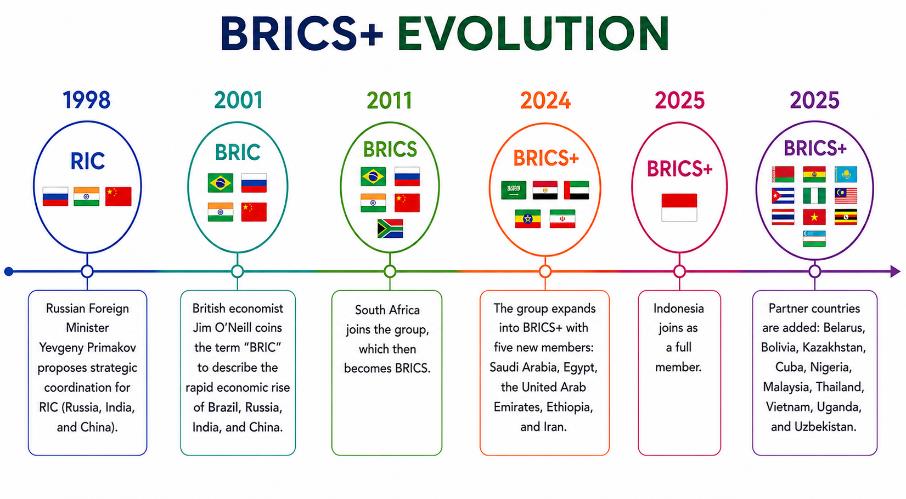
Pakistan’s prospective engagement with BRICS has emerged as an important policy question, particularly in the context of shifting global power dynamics. This insight examines Pakistan’s prospects for accession to BRICS from both economic and strategic perspectives. BRICS has evolved from a major economic bloc into a strategic coordination framework representing emerging economies of the Global South. Originating from Russia, India, and China (RIC), the grouping eventually expanded into BRICS+ (Figure 1).
Figure 1: Evolution BRICS+
Sources: BRICS.org
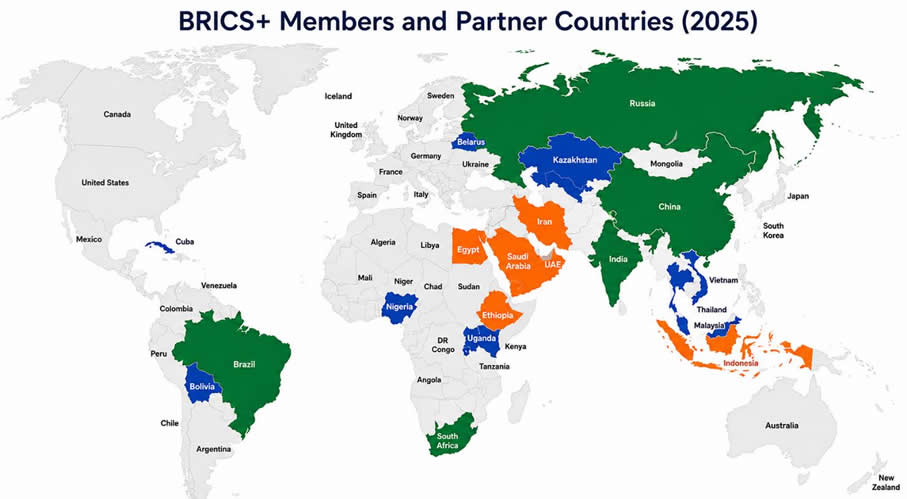
Figure 2: Member States of BRICS
Sources: BRICS.org
BRICS has expanded significantly beyond its original economic mandate to include three core pillars: political and security cooperation, economic coordination, and people-to-people engagement. Collectively, BRICS+ represents 49.5% of the world's population, accounts for 40% of global GDP, and comprises 26% of global trade. Trade among the BRICS+ countries exceeded $1 trillion in 2025, underscoring their increasing influence in global politics and the economic order. Notably, almost 40 countries have expressed their interest in becoming a BRICS+ member or a partner country so far. Pakistan formally expressed interest in joining BRICS in 2023 to advance economic diversification, regional connectivity, and engagement with emerging economies.
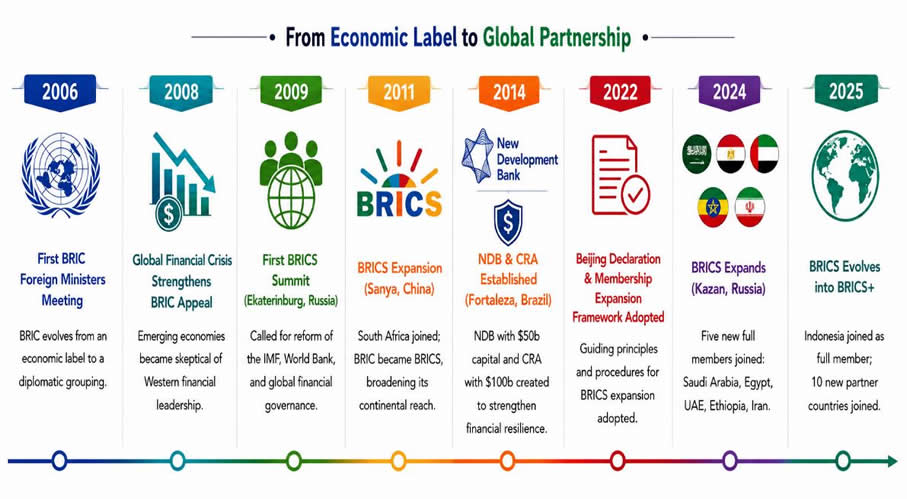
Figure 3: BRICS Key Milestone Timeline
Sources: BRICS Portal.org
However, as deliberations on future expansion continue ahead of the 18th BRICS Summit in India in September 2026, Pakistan’s membership prospects remain uncertain and politically sensitive due to economic vulnerabilities and India’s opposition. Economically, BRICS+ offers significant opportunities for Pakistan in trade, energy, industry, and food security, as its members collectively produce 40% of the world's oil and 42% of the world's food. Fast-growing BRICS+ consumer markets, especially in Africa, where spending may reach $2.5 trillion by 2030, offer demand for Pakistani textiles, rice, halal food, pharmaceuticals, surgical instruments, sports goods, and leather. Tariffs within BRICS have declined from 10–20% to single-digit levels, potentially creating a more favorable environment.
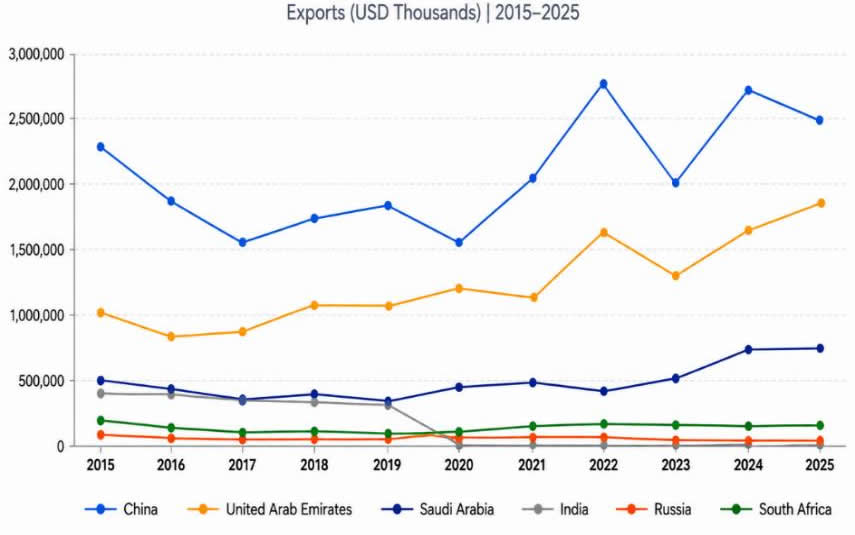
However, access to lower tariff markets would not necessarily result in export growth. Pakistan's ability to capitalize on BRICS+ markets depends on product diversification, market competitiveness, and regional value chain integration. In FY25, Pakistan's textile exports grew to $17.88 billion, and BRICS+ economies account for 22.5% of its exports without formal membership. Therefore, the key opportunity lies in market diversification beyond traditional Western markets, and Pakistan would need to go through parallel domestic reforms to enhance export competitiveness to realize Pakistan’s $25 billion textile export target. Moreover, as BRICS+ accounts for nearly two-thirds of the Global South economy and around 20% of South-South trade, membership could facilitate greater industrial collaboration, technology transfer, and participation in regional value chains.
Pakistan's workforce of more than 85 million and its expanding mineral exports to China, including copper exports exceeding US$1 billion and aluminum ore exports rising by 4,700% in 2025, provide a solid foundation for attracting investment and integrating into BRICS-led industrial and manufacturing networks. Beyond trade opportunities, BRICS+ could broaden Pakistan's access to development finance through the New Development Bank (NDB). With an authorized capital of $100 billion, the NDB has financed 96 projects worth $32.8 billion. Pakistan is considering the purchase of 5,882 capital shares in the NDB worth approximately $582 million. However, NDB financing cannot be considered an alternative to International Monetary Fund (IMF) support and remains supplementary to IMF funding, given Pakistan’s continued reliance on IMF.
The IMF mainly provides macroeconomic stabilization and balance of payments support, while the NDB provides project-based infrastructure and sustainable development financing. Therefore, NDB access could complement rather than replace Pakistan’s dependence on Western-led institutions for long-term infrastructure funding. Pakistan's geographical location is also strategically crucial to BRICS+ engagement. Situated at the intersection of South Asia, Central Asia, and West Asia.
Figure 4: Pakistan’s Exports with BRICS Countries
Sources: State Bank of Pakistan
Pakistan can reinforce the BRICS+ goals of regional connectivity, trade corridors, maritime connectivity, and integration of the Eurasian continent. China-Pakistan-Economic-Corridor (CPEC) investments valued at $62 billion have reinforced Pakistan's infrastructure development, energy corridors, and regional connectivity.
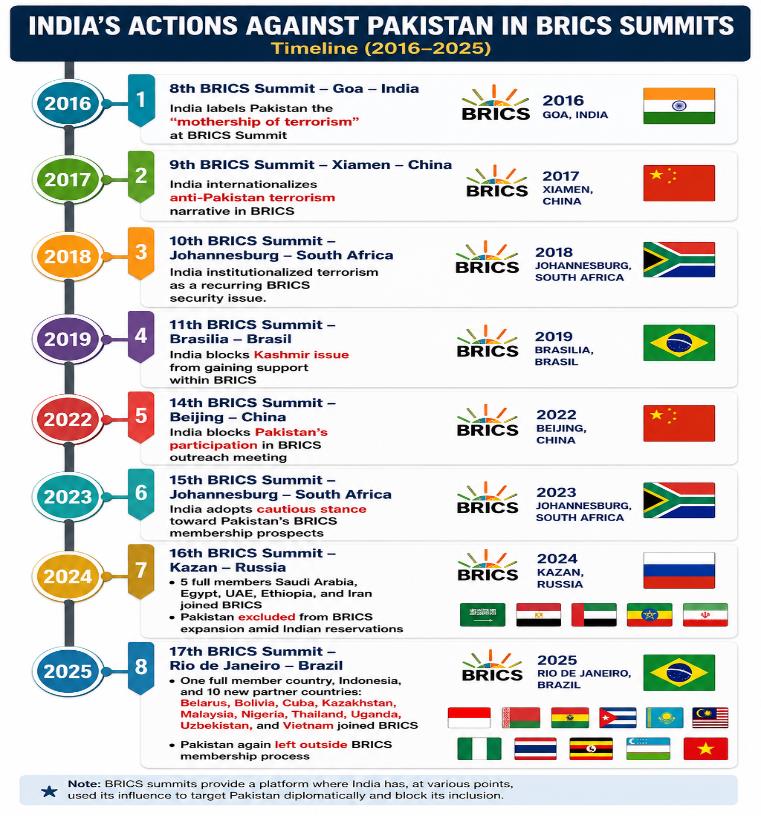
Yet Pakistan's strategic relevance does not automatically translate into a viable pathway to BRICS membership. The 2022 BRICS+ expansion framework requires full consultation and consensus, making India’s opposition a structural barrier rather than a political hurdle (Figure 5). Under a consensus-based expansion process, New Delhi's objection effectively operates as a de facto veto over Pakistan's accession. Support from China, Russia, or other influential members may strengthen Pakistan's diplomatic position, but cannot overcome the absence of consensus.
Pakistan’s economic vulnerabilities remain another major hindrance as Pakistan continues to face structural economic issues. For instance, in FY25, Pakistan's GDP growth rate was 3.04%, a lower per capita income of $1,812, and its economy size was $407b. Additionally, Pakistan’s reliance on IMF programs reflects persistent structural vulnerabilities, which could raise concerns among BRICS+ members regarding economic sustainability and financial stability.
Figure 5: Indias Actions against Pakistan in BRICS Summits
Sources: BRICS.org
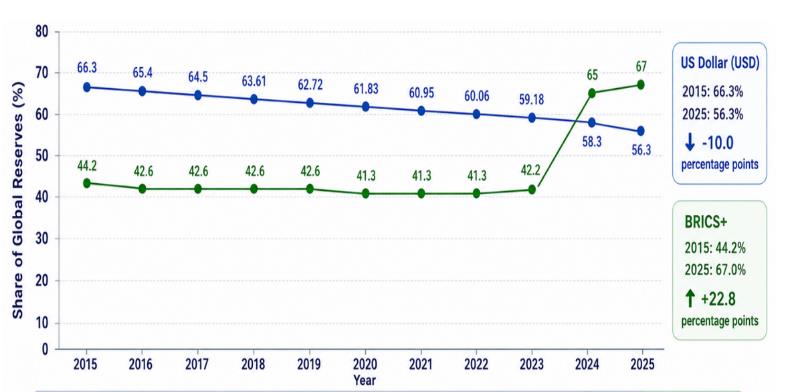
Pakistan’s prospects of BRICS+ membership must be analyzed under the broader context of US-China Competition and the bloc’s gradual movement toward potential de-dollarization. BRICS countries currently undertake nearly 67% of intra-bloc trade in local currencies, while the US dollar's share of global foreign currency reserves has dropped to 56.3%, the lowest level since 1995. Pakistan could potentially benefit from reduced transaction costs, greater trade facilitation, and access to alternative financial arrangements. However, Pakistan would need to pursue a balanced and pragmatic approach.
President Trump’s 2025 threat to impose 100% tariffs on BRICS members pursuing alternative currency arrangements demonstrates the potential costs of being perceived as supporting an explicitly anti-dollar agenda.
Figure 6: US Dollar and BRICS+ Share of Global Reserves by Currency
Sources: IMF.org
The economic rationale for deeper BRICS+ engagement outweighs its limitations; however, under the current circumstances, Pakistan’s prospects for full membership remain unlikely in the near term due to India's de facto blocking position. However, over the long-term, evolving regional dynamics could create greater diplomatic space for Pakistan’s membership. Therefore, Pakistan should prioritize trade, economic competitiveness, and connectivity cooperation with BRICS+ members while pursuing diplomatic efforts to improve its long-term membership prospects.